BOATING
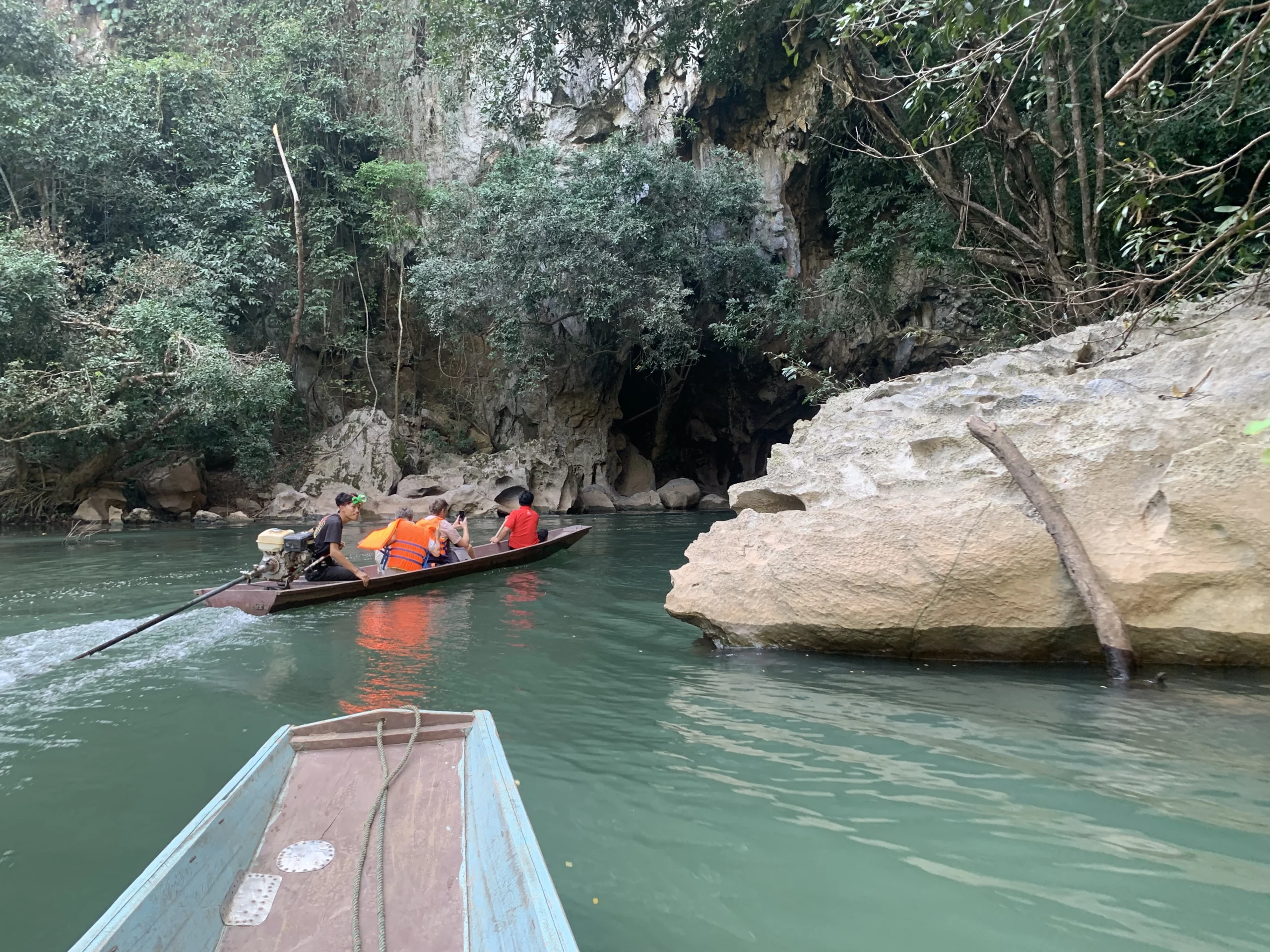
The Hinboun River is the lifeline of the Geopark and an unforgettable way to discover it.
Boat crossings and short cruises are available through local operators, guesthouses and community groups.
The most iconic experience is the boat crossing of the Konglor-Natane Tunnel Cave, a geosite of international significance. Organized by the AEKN (Association Ecotouristique de Konglor-Natane), a community-based association, the journey takes about one hour (one-way trip) and passes through a spectacular underground river, with stops at two concretion chambers. It is doable both ways, from Konglor and Natane piers (one-way or roundtrip). Since 2026, you can even ask at the Konglor and Natane tickets offices to live this unique experience on an electric boat, if you would rather hear the cave, not the engine! (this service is subject to e-boats availability at the piers, since this is a pilot fleet that cannot replace all fueled-powered boats for now).
Boat crossings and short cruises are available through local operators, guesthouses and community groups.
The most iconic experience is the boat crossing of the Konglor-Natane Tunnel Cave, a geosite of international significance. Organized by the AEKN (Association Ecotouristique de Konglor-Natane), a community-based association, the journey takes about one hour (one-way trip) and passes through a spectacular underground river, with stops at two concretion chambers. It is doable both ways, from Konglor and Natane piers (one-way or roundtrip). Since 2026, you can even ask at the Konglor and Natane tickets offices to live this unique experience on an electric boat, if you would rather hear the cave, not the engine! (this service is subject to e-boats availability at the piers, since this is a pilot fleet that cannot replace all fueled-powered boats for now).
CLIMBING
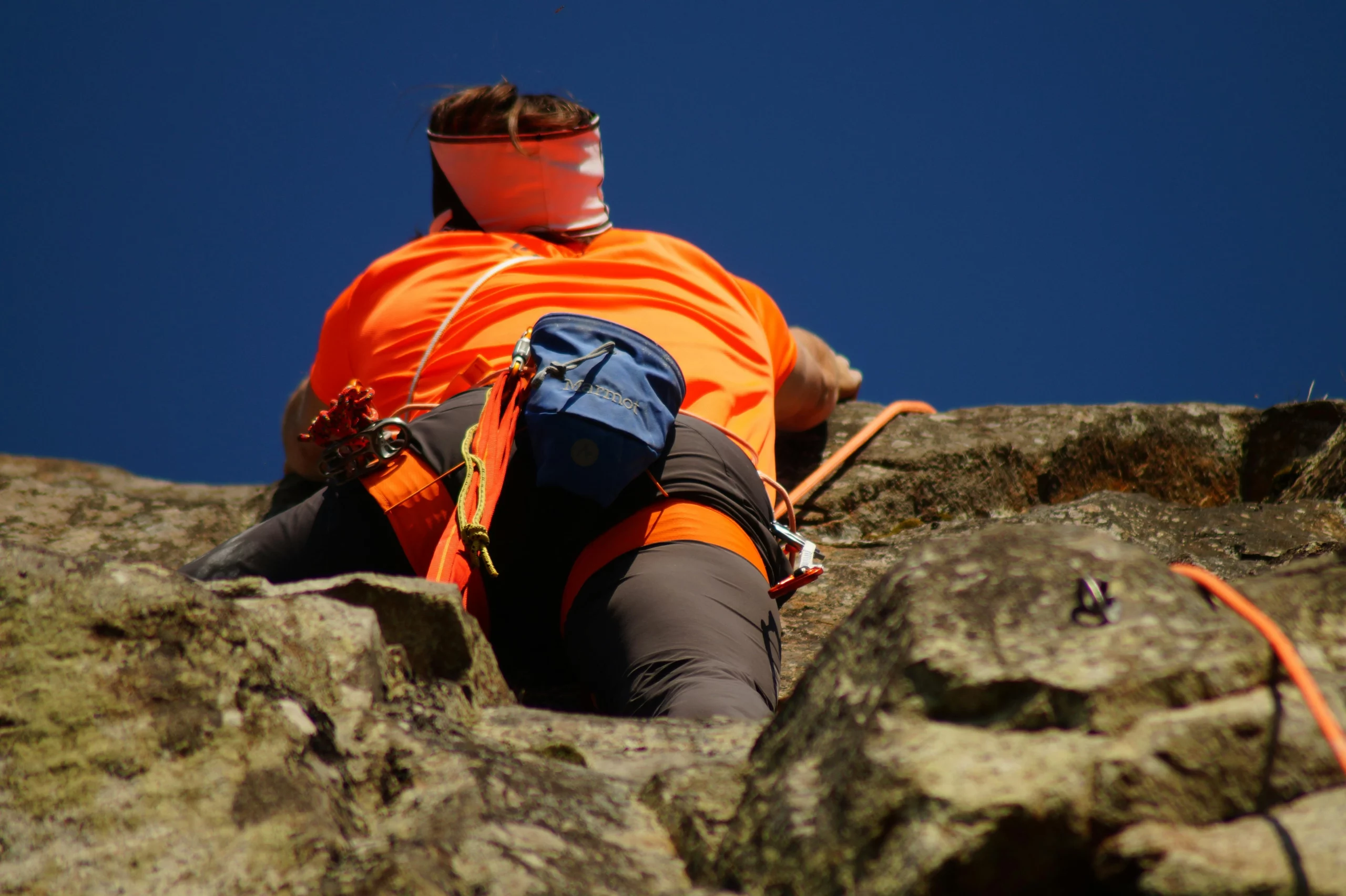
While climbing sites exist within the Geopark, rock climbing is strongly discouraged:
- Fixed equipment (bolts, anchors) is not regularly maintained or inspected.
- The tropical climate and geological conditions accelerate equipment degradation.
- No gear rental or rescue services are available.
For safety reasons, climbing in the Geopark is not recommended.
- Fixed equipment (bolts, anchors) is not regularly maintained or inspected.
- The tropical climate and geological conditions accelerate equipment degradation.
- No gear rental or rescue services are available.
For safety reasons, climbing in the Geopark is not recommended.
CYCLING
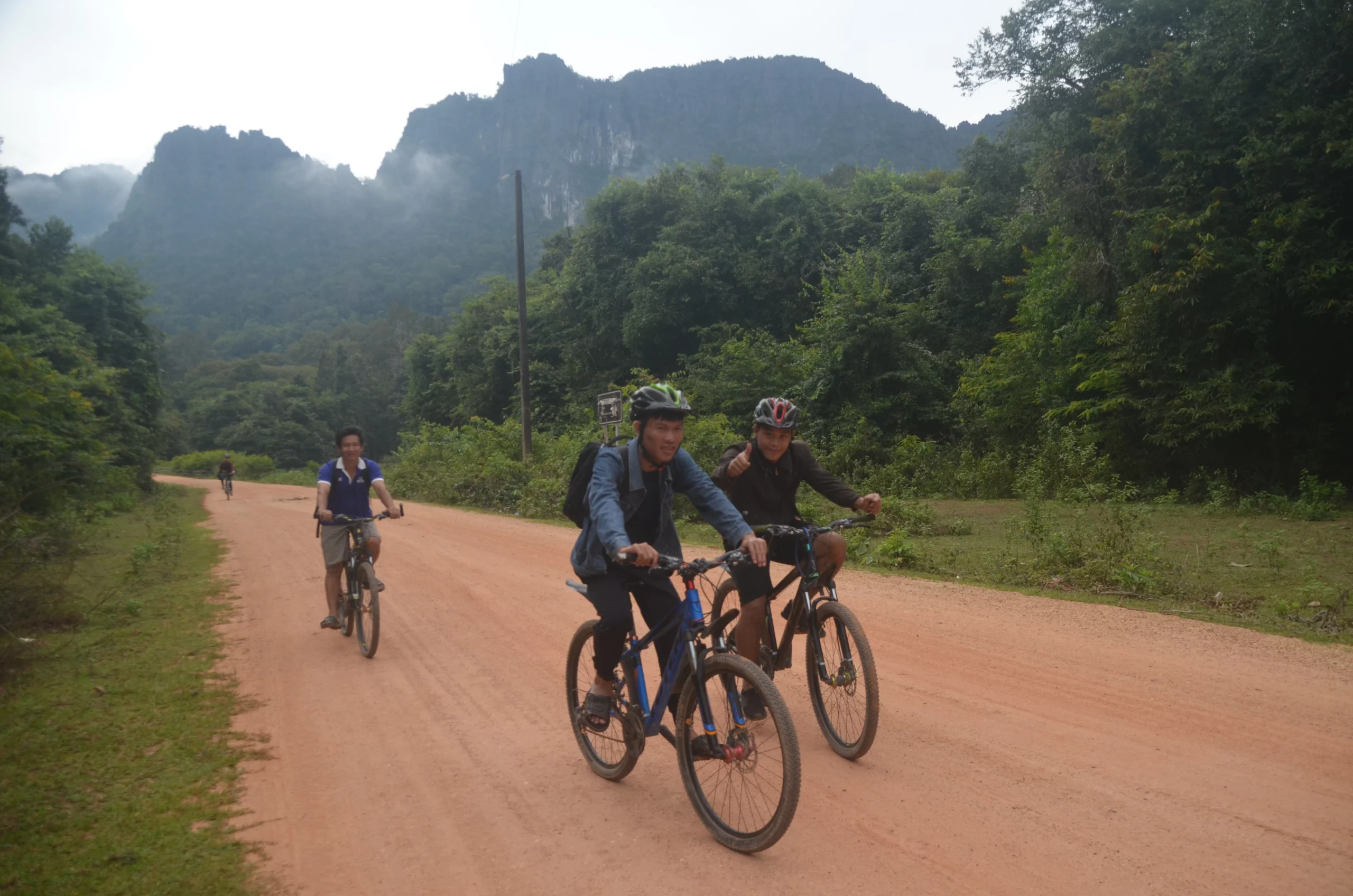
Cycling is a wonderful way to experience Hinboun Geopark in slow-travel mode, allowing time to connect with landscapes and local life.
Bicycles can be rented at several locations across the Geopark:
Konglor: at the boat pier, the local community association rents bicycles to explore Konglor village and its surroundings, and to reach nearby geosites such as Pha Tham Khouay (Tectonic Dipping Beds).
Natane: bicycles are also available at the pier, offering access to geosites like Phabane Mogote and Natan Polje. Along the way, cyclists may pass through preserved traditional villages such as Nahang, known for its family food gardens and wooden houses, or Natane and its traditional hand-woven textiles.
Practical tip: distances are short, but the heat can be intense. Bring water, sun protection and plan early morning or late afternoon rides
Bicycles can be rented at several locations across the Geopark:
Konglor: at the boat pier, the local community association rents bicycles to explore Konglor village and its surroundings, and to reach nearby geosites such as Pha Tham Khouay (Tectonic Dipping Beds).
Natane: bicycles are also available at the pier, offering access to geosites like Phabane Mogote and Natan Polje. Along the way, cyclists may pass through preserved traditional villages such as Nahang, known for its family food gardens and wooden houses, or Natane and its traditional hand-woven textiles.
Practical tip: distances are short, but the heat can be intense. Bring water, sun protection and plan early morning or late afternoon rides
KAYAKING
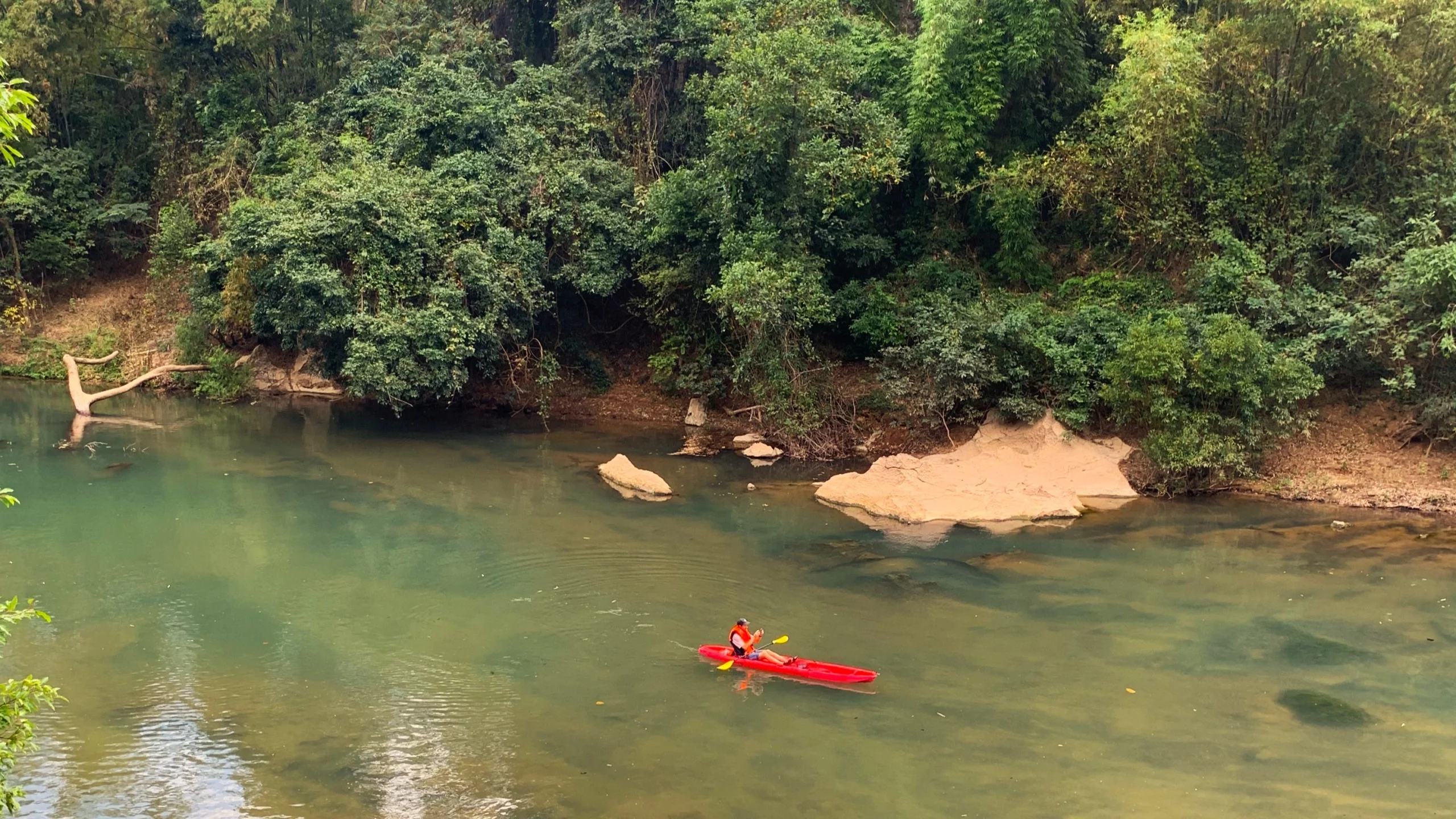
Kayaking is one of the most immersive ways to experience the Geopark’s rivers.
Several local operators offer half-day to multi-day kayak trips on the Hinboun and its tributaries.
The geosite Houay Nam Sai Karst Spring (The Blue Lagoon) is accessible only by kayak.
Several local operators offer half-day to multi-day kayak trips on the Hinboun and its tributaries.
The geosite Houay Nam Sai Karst Spring (The Blue Lagoon) is accessible only by kayak.
ZIPLINING & VIA FERRATA
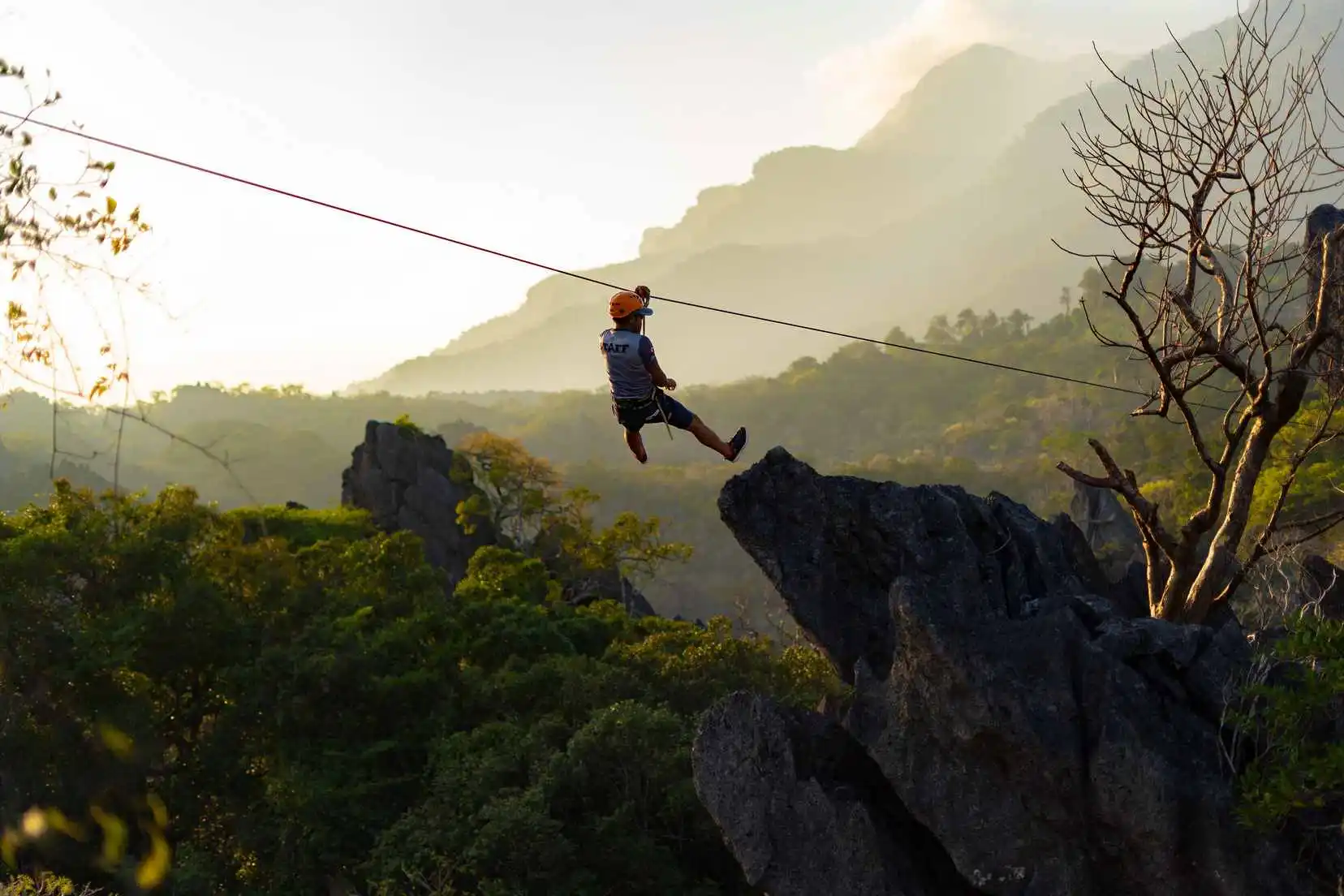
At the Karst of Phou Pha Marn (The Rock View Point), visitors can explore the karst forest canopy and cliffs with zipline circuits, spider nets and via ferrata routes, for few hours up to full-day adventures. Just ask at the Rock View Point reception desk!
CANYONING
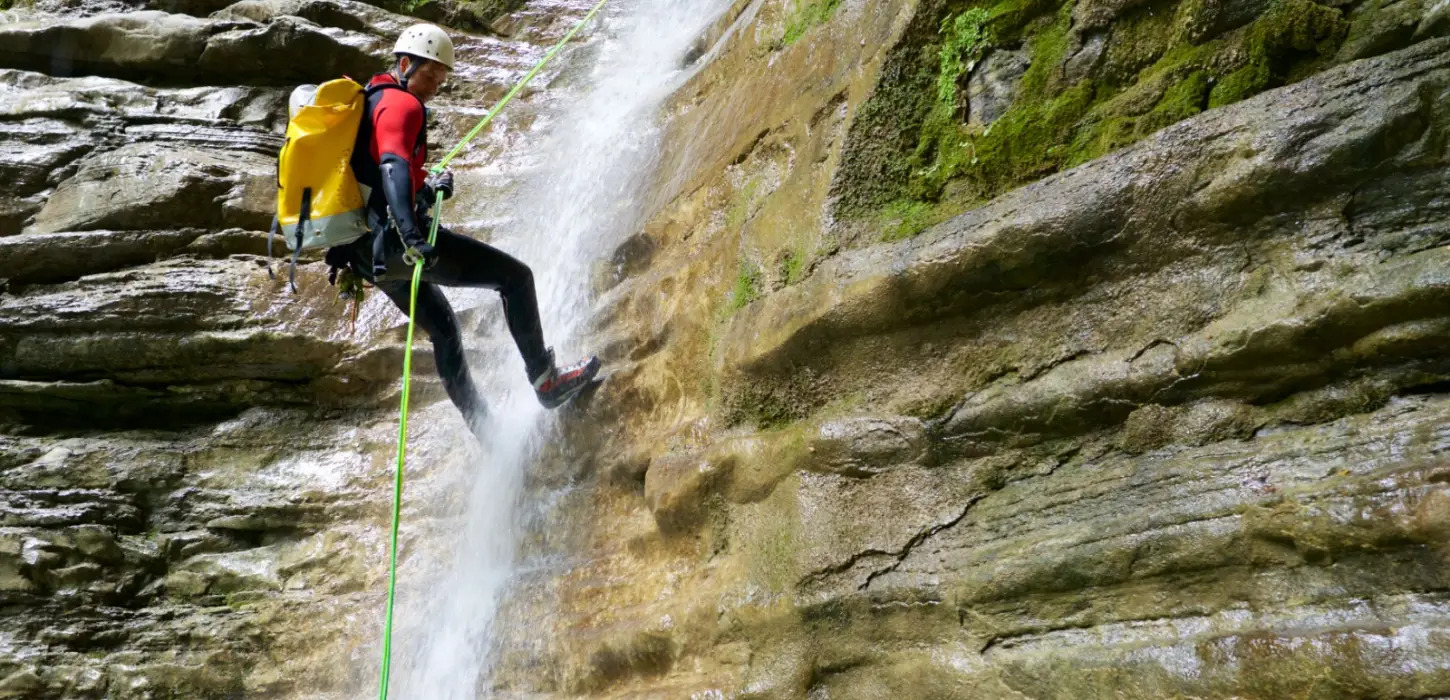
Adventure seekers can explore hidden waterfalls and limestone corridors through canyoning experiences, mainly operated near the Karst of Phou Pha Marn (The Rock View Point) and Nam Sanam Waterfalls geosites.
All canyoning trips must be done with professional operators, using proper equipment and safety supervision.
All canyoning trips must be done with professional operators, using proper equipment and safety supervision.
CAVE EXPLORATION
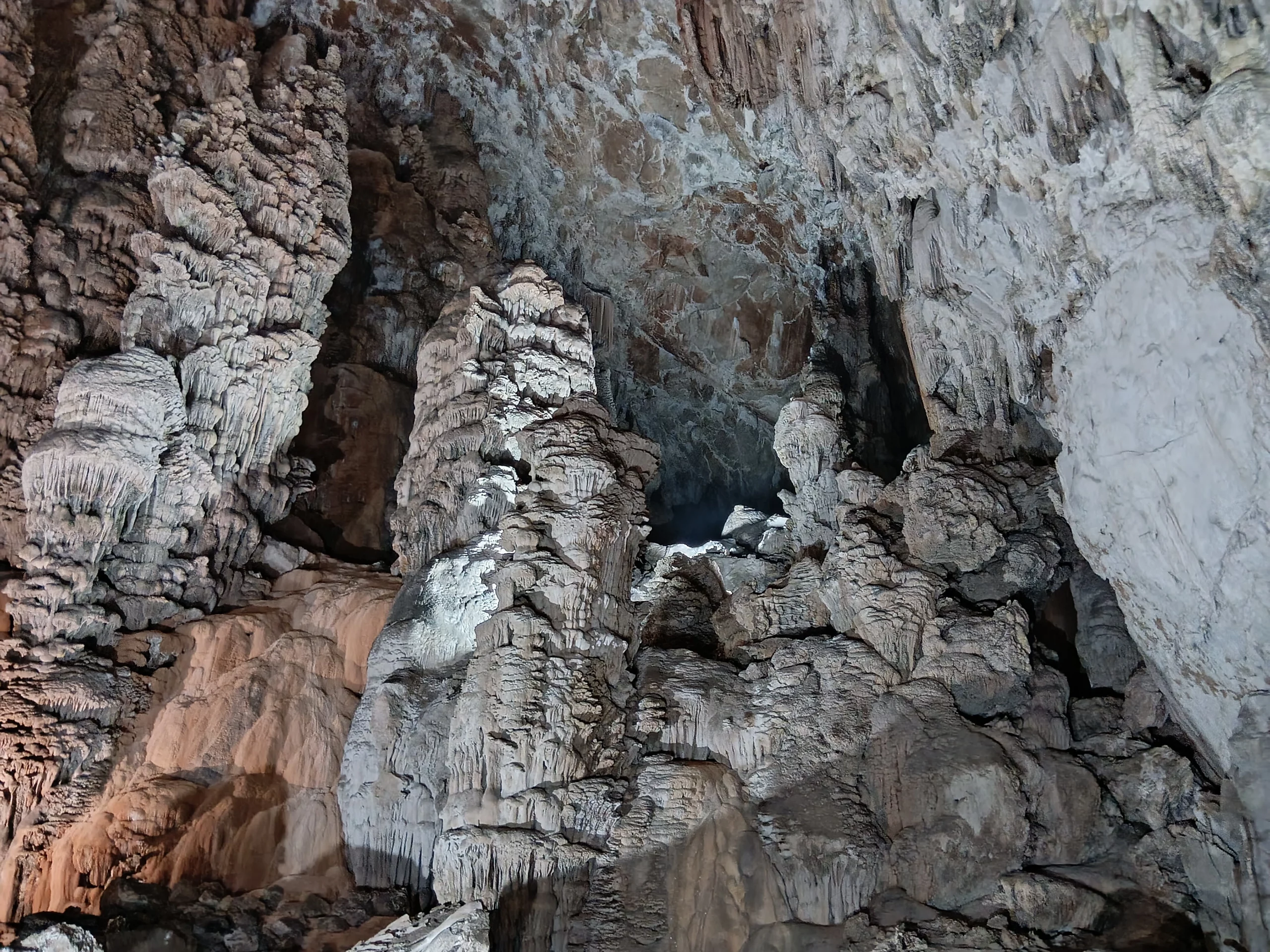
The karst landscapes of Hinboun Geopark are riddled with caves, many of them exceptional both geologically and culturally. Among the Geopark’s most remarkable caves (which also happen to be geosites!):
Konglor-Natane Tunnel Cave: a spectacular multi-kilometer-long tunnel cave crossed exclusively by boat and managed by a community-based association, AEKN. The underground journey takes about one hour and includes two accessible chambers with impressive concretions.
Namnone Cave: a dry cave extending deep into the limestone massif,offering a genuine underground adventure. Visits are recommended with a local guide and proper equipment (headlamp, helmet), as there is no lighting or built infrastructure.
Tham Pha Mue - Prehistoric Rock Art: a cliff cave featuring more than 200 prehistoric paintings and handprints, making it the only known site of this kind in southern Laos. This prehistoric site is under community-based management by Khoungeun village groups and guides.
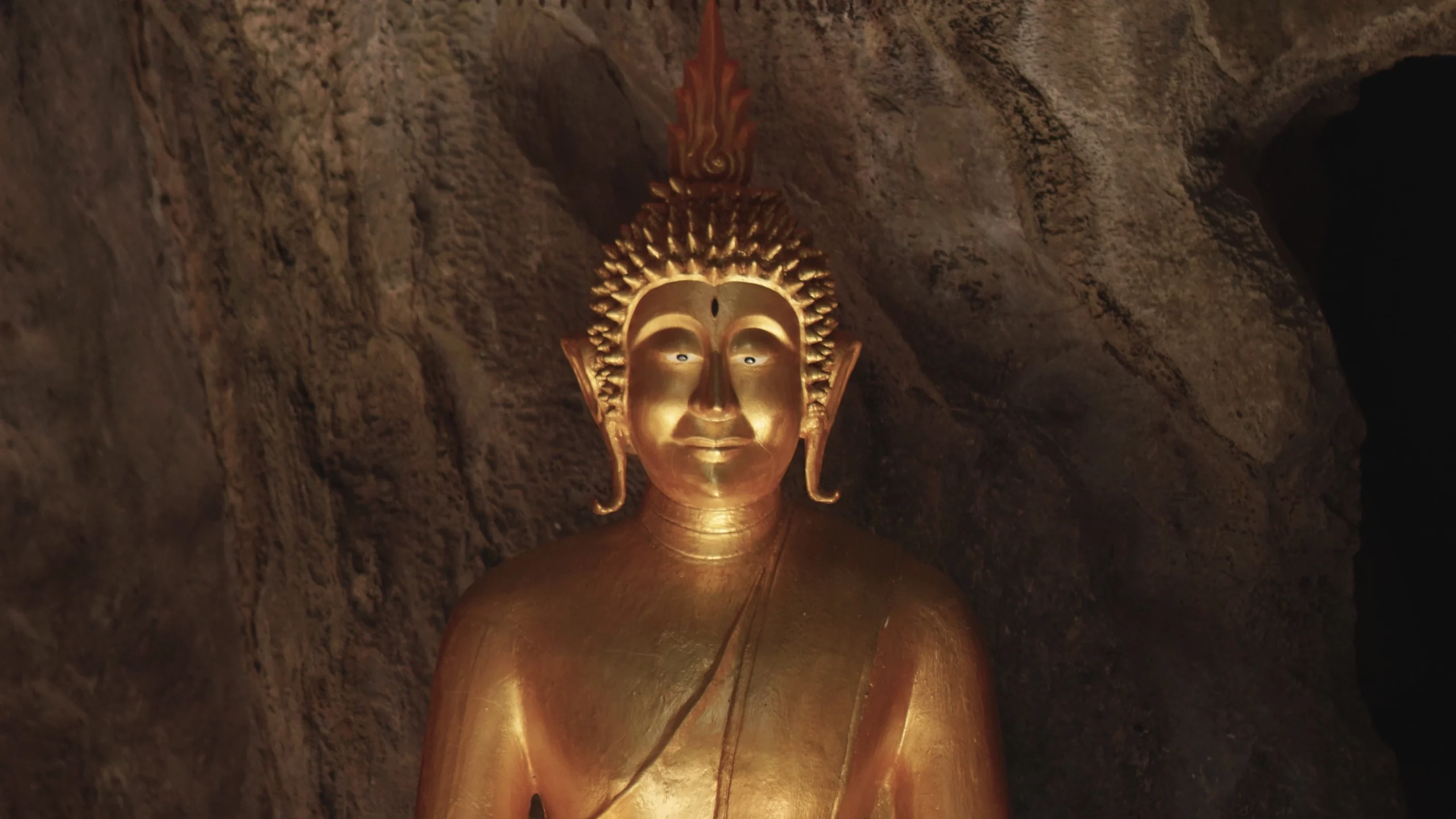
Tham Pha Kong Buddhist Temple: A sacred cave sheltering an ancient Buddhist temple, still used for spiritual practices by monks and local communities.
Did you know ? Cave enthusiasts should not miss the famous Xe Bang Fai Cave (another underground river accessible by boat – you can purchase your tickets directly at the Nongping community-campsite) in the neighboring Him Namno National Park (UNESCO World Heritage), accessible via “The Small Loop” extension to “The Loop”.
Konglor-Natane Tunnel Cave: a spectacular multi-kilometer-long tunnel cave crossed exclusively by boat and managed by a community-based association, AEKN. The underground journey takes about one hour and includes two accessible chambers with impressive concretions.
Namnone Cave: a dry cave extending deep into the limestone massif,offering a genuine underground adventure. Visits are recommended with a local guide and proper equipment (headlamp, helmet), as there is no lighting or built infrastructure.
Tham Pha Mue - Prehistoric Rock Art: a cliff cave featuring more than 200 prehistoric paintings and handprints, making it the only known site of this kind in southern Laos. This prehistoric site is under community-based management by Khoungeun village groups and guides.
Tham Pha Kong Buddhist Temple: A sacred cave sheltering an ancient Buddhist temple, still used for spiritual practices by monks and local communities.
Did you know ? Cave enthusiasts should not miss the famous Xe Bang Fai Cave (another underground river accessible by boat – you can purchase your tickets directly at the Nongping community-campsite) in the neighboring Him Namno National Park (UNESCO World Heritage), accessible via “The Small Loop” extension to “The Loop”.
CULTURAL SIGHTSEEING
Beyond its geosites, some of which with historical and cultural interest, Hinboun Geopark is rich in many other historical and cultural heritage sites, such as ancient forges, wartime shelters from the Indochina conflict, sacred sites, temples, stupas and places tied to local legends.
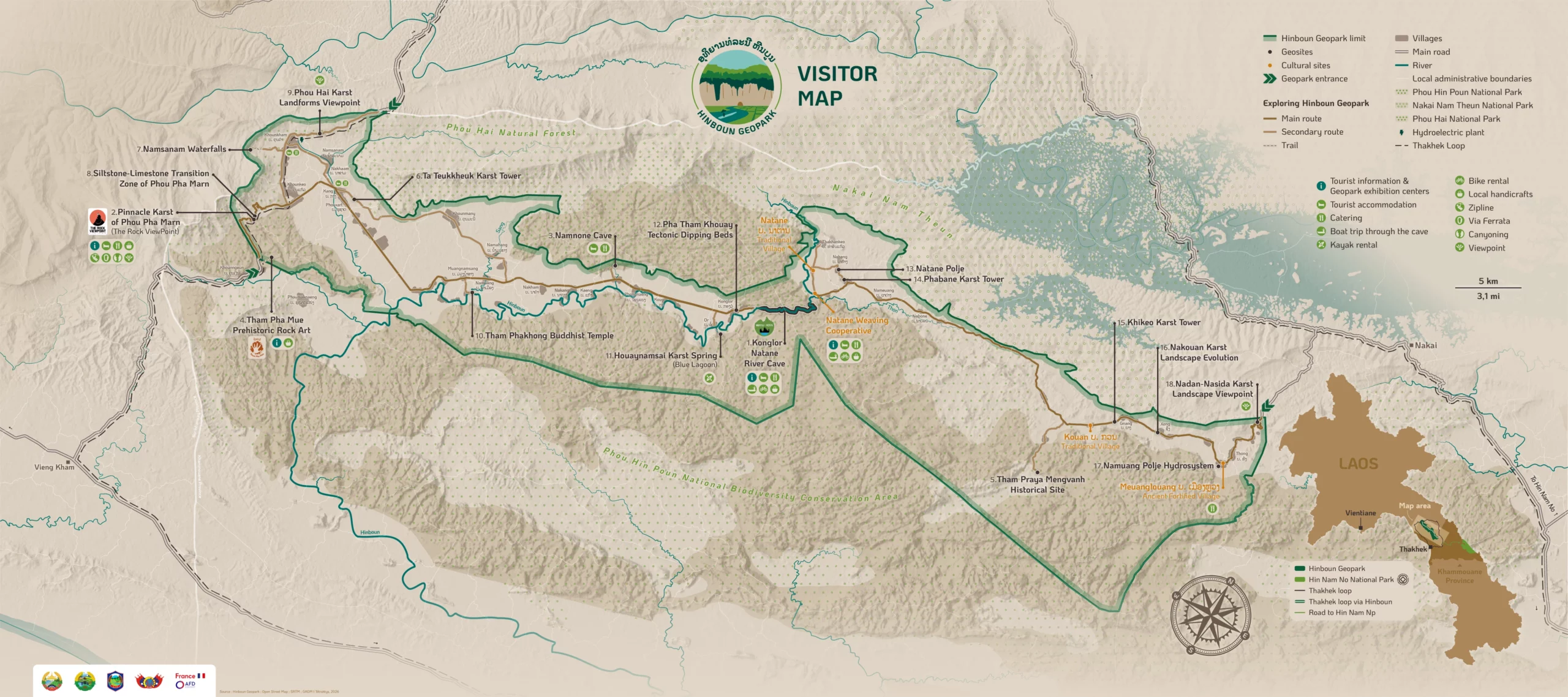
All cultural sites are listed on Hinboun Geopark Visitor Map and in the Other Attractions section.
Additional resources on the Geopark’s history and culture can be found in the Pedagogical Tools and References sections of the website.
All cultural sites are listed on Hinboun Geopark Visitor Map and in the Other Attractions section.
Additional resources on the Geopark’s history and culture can be found in the Pedagogical Tools and References sections of the website.
HIKING
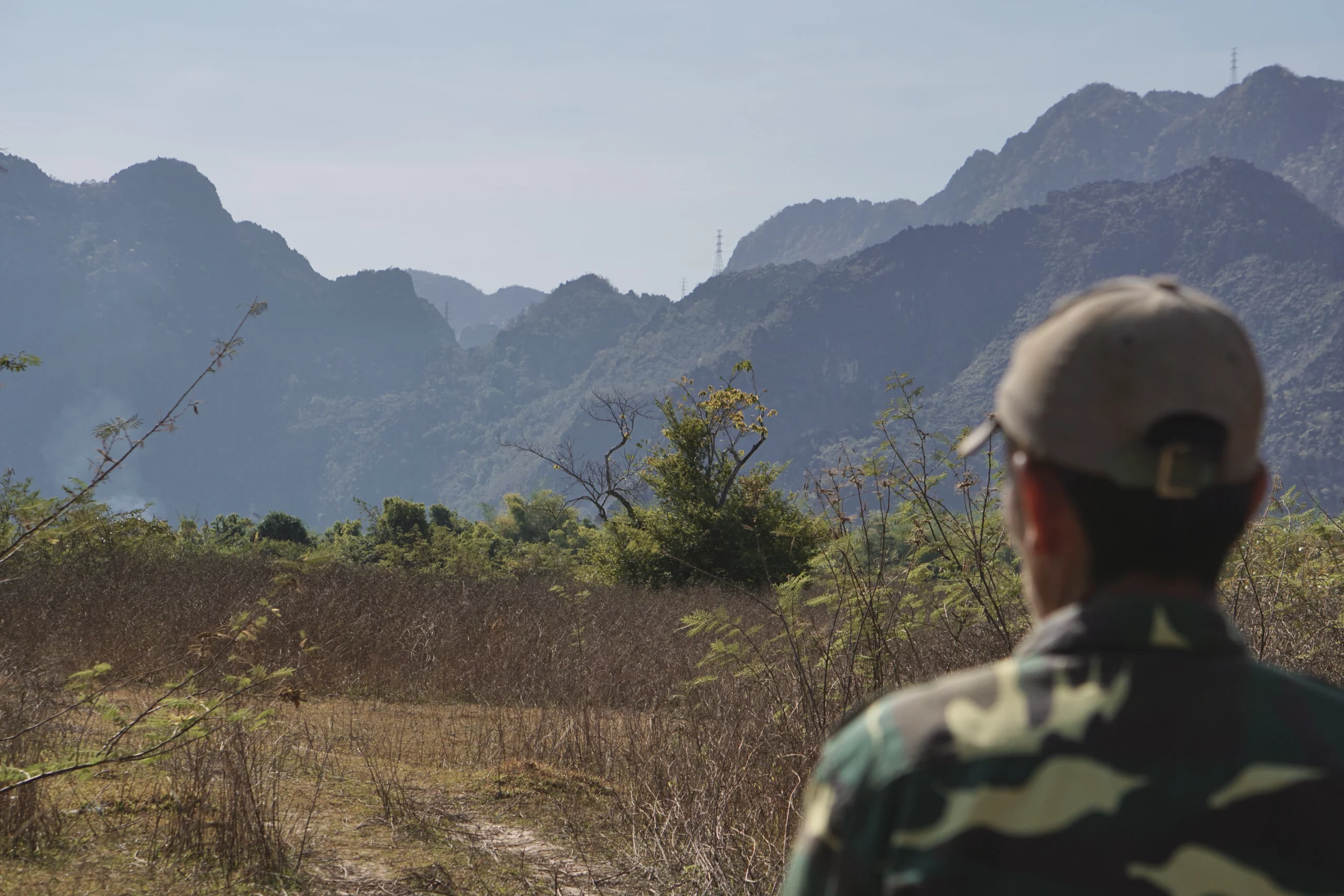
Several hiking routes are available across Hinboun Geopark:
- With a local guide or tour operator
- Independently, for experienced hikers.
Popular options include:
- Hiking between Konglor and Natan over the karst, instead of crossing by boat.
- Exploring sections of the Hinboun Great Traverse, a long-distance route currently under development.
Safety advice: when hiking independently, always carry sufficient water, food, sun protection, a map, and inform someone of your route.
Did you know ? hiking lovers can also explore the several trekking routes offered by the guides from the Nongping community campsite in Him Namno National Park (UNESCO World Heritage), accessible via “The Small Loop” extension to “The Loop”.
- With a local guide or tour operator
- Independently, for experienced hikers.
Popular options include:
- Hiking between Konglor and Natan over the karst, instead of crossing by boat.
- Exploring sections of the Hinboun Great Traverse, a long-distance route currently under development.
Safety advice: when hiking independently, always carry sufficient water, food, sun protection, a map, and inform someone of your route.
Did you know ? hiking lovers can also explore the several trekking routes offered by the guides from the Nongping community campsite in Him Namno National Park (UNESCO World Heritage), accessible via “The Small Loop” extension to “The Loop”.

WILDLIFE OBSERVATION
Hinboun Geopark hosts exceptional biodiversity, with several species critical to ecosystems and even endemic to central Laos. Specialized excursions are available for birdwatching, insects, butterflies and flora, guided by local experts.
Further resources on Hinboun Geopark’s fauna and flora can be found in the Pedagogical Tools and References sections of the website.
Further resources on Hinboun Geopark’s fauna and flora can be found in the Pedagogical Tools and References sections of the website.
ROADTRIPPING « THE LOOP » AND « THE SMALL LOOP »
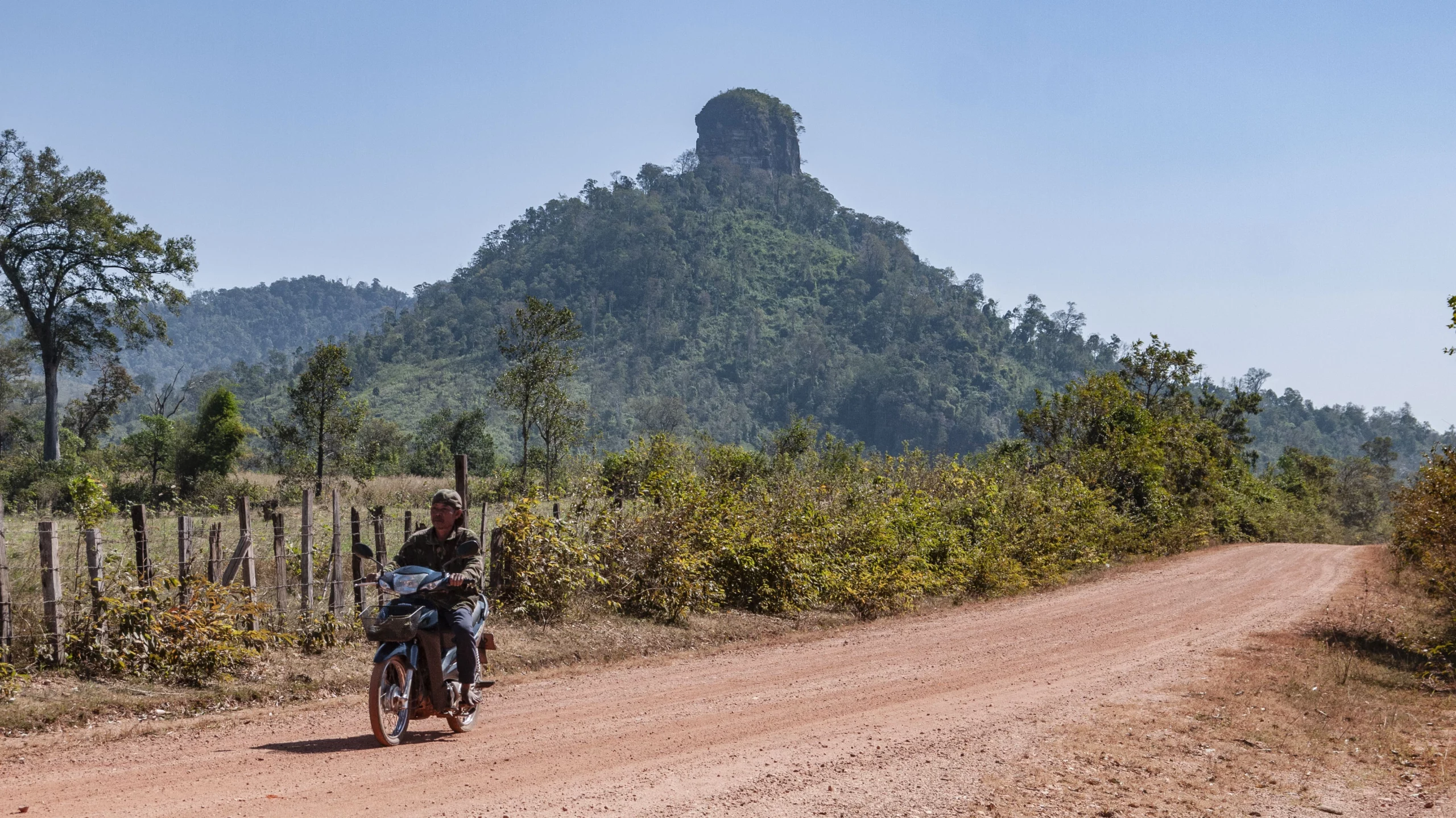
From Thakhek, travelers can rent motorbikes or scooters to ride The Loop, which circles and crosses the Hinboun Geopark.
For the most adventurous, take the full east-west crossing of The Loop, involving an unpaved road section between Nakai and Natane and transporting the bike by boat through the Konglor-Natane Tunnel Cave – a unique experience!
Important notice: This itinerary is not a formal tourism product and is not organized, managed or operated by the Hinboun Geopark. The Geopark cannot organize, book or coordinate all or part of The Loop roadtrip for visitors. Travelers must plan and organize their journey independently.
To go further: The Loop can easily be extended with The Small Loop, that notably leads to Him Namno National Park (UNESCO World Heritage), featuring community-based ecotourism at Nongping, the Xe Bang Fai Cave, the Xieng Lue Waterfall and multiple jungle treks.
For the most adventurous, take the full east-west crossing of The Loop, involving an unpaved road section between Nakai and Natane and transporting the bike by boat through the Konglor-Natane Tunnel Cave – a unique experience!
Important notice: This itinerary is not a formal tourism product and is not organized, managed or operated by the Hinboun Geopark. The Geopark cannot organize, book or coordinate all or part of The Loop roadtrip for visitors. Travelers must plan and organize their journey independently.
To go further: The Loop can easily be extended with The Small Loop, that notably leads to Him Namno National Park (UNESCO World Heritage), featuring community-based ecotourism at Nongping, the Xe Bang Fai Cave, the Xieng Lue Waterfall and multiple jungle treks.
THE « HINBOUN GREAT TRAVERSE »
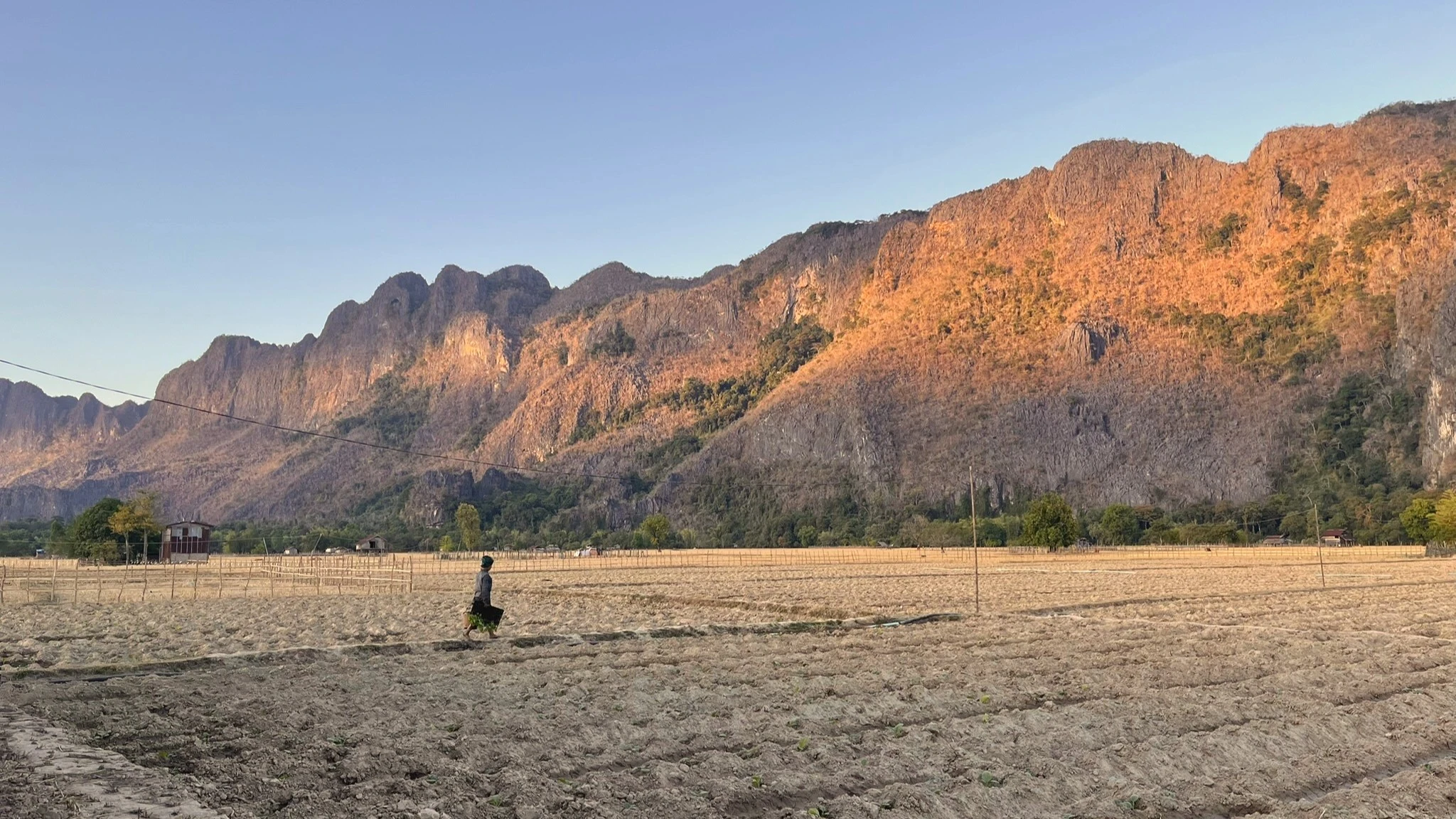
The Hinboun Great Traverse is a long-distance, multimodal itinerary that conceptually allows travelers to cross the Hinboun Geopark from west to east by combining hiking, cycling and boat travelling.
Important notice: This itinerary is not a formal tourism product and is not organized, managed or operated by the Hinboun Geopark. The Geopark cannot organize, book or coordinate all or part of the traverse for visitors. Travelers must plan and organize their journey independently, by contacting local tour operators, guides and boatmen directly for each segment. Trails along the route are not signposted, marked or regularly maintained, and there is no dedicated infrastructure (campsites, safety facilities, rescue services). Route conditions may vary depending on season, weather and river levels. Only certain sections of the traverse are currently more easily achievable than others. Attempting the full crossing requires strong autonomy, solid outdoor experience and careful preparation. By choosing to engage on the Hinboun Great Traverse, travelers do so entirely at their own responsibility and risk.
Important notice: This itinerary is not a formal tourism product and is not organized, managed or operated by the Hinboun Geopark. The Geopark cannot organize, book or coordinate all or part of the traverse for visitors. Travelers must plan and organize their journey independently, by contacting local tour operators, guides and boatmen directly for each segment. Trails along the route are not signposted, marked or regularly maintained, and there is no dedicated infrastructure (campsites, safety facilities, rescue services). Route conditions may vary depending on season, weather and river levels. Only certain sections of the traverse are currently more easily achievable than others. Attempting the full crossing requires strong autonomy, solid outdoor experience and careful preparation. By choosing to engage on the Hinboun Great Traverse, travelers do so entirely at their own responsibility and risk.