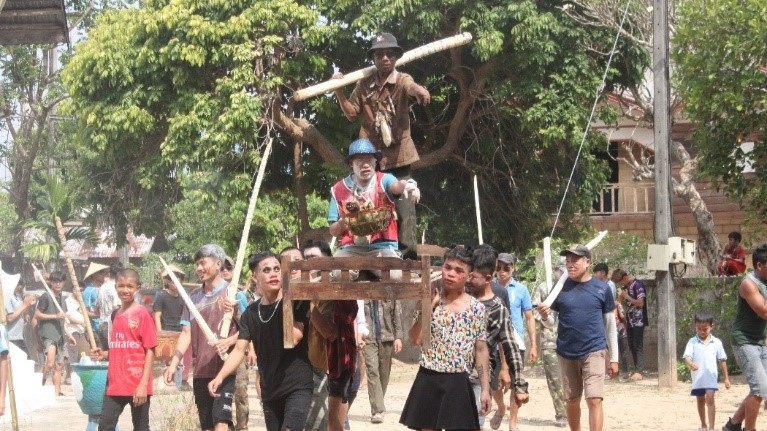
The Linhoun Festival, held in Konglor village, is an annual traditional ceremony of the Tai Bo ethnic group. It aims to protect the community from illness, misfortune and malevolent spirits, while strengthening social cohesion and spiritual balance.
Rooted in ancient animist beliefs linked to the sacred landscape of the Konglor Cave, the festival later integrated Buddhist practices, reflecting the coexistence of spiritual traditions in Laos.
The festival takes place each year before the Lao New Year, according to the lunar calendar (usually in March). Preparations include ritual offerings and symbolic acts intended to protect the village and its surroundings. Traditional music accompanies night-long ceremonies led by elders and ritual specialists.
The celebrations continue with Buddhist rites, almsgiving, and a baci ceremony dedicated to prosperity, harmony and well-being.
The Linhoun Festival remains a key moment of cultural transmission and collective identity within the Geopark.
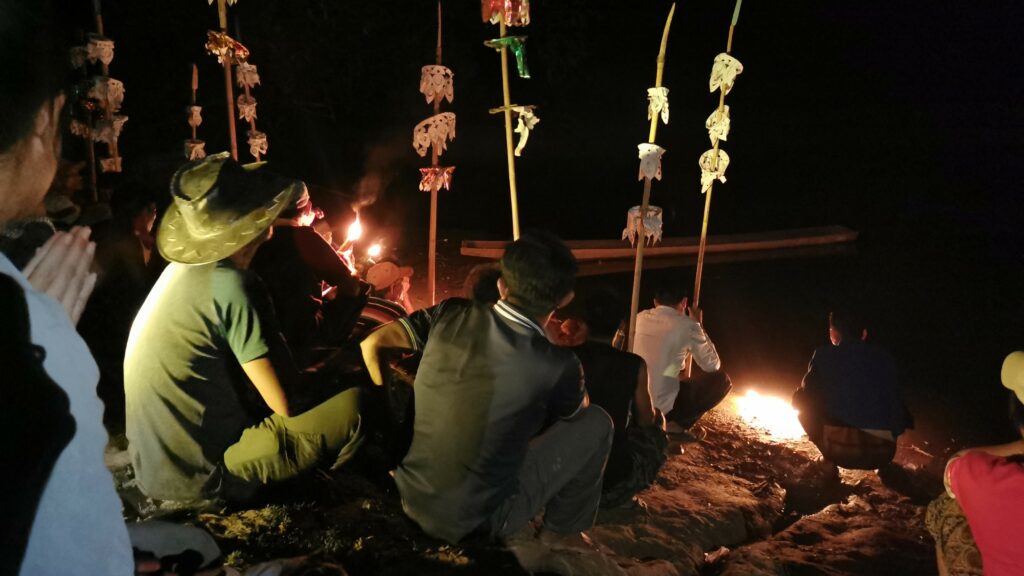
The Boat Racing Festival, known in Laos as Boun Suang Heua, is one of the country’s most important traditional celebrations. It takes place every year at the end of the rainy season, usually in September or October, when rivers are at their highest levels.
The festival centers on spectacular races of long wooden boats, carved and decorated, crewed by teams from villages and communities along rivers. Drums, chants and lively crowds accompany the competitions.
Beyond sport, the festival has deep spiritual and cultural significance. It pays tribute to the Naga, the protective water spirits, marks the end of Buddhist Lent (Vassa), and celebrates the vital role of rivers in agriculture, fishing and daily life.
Boun Suang Heua strengthens community bonds and local identity, combining spirituality, celebration and respect for water and nature.
