Towards the first UNESCO Global Geopark in Laos
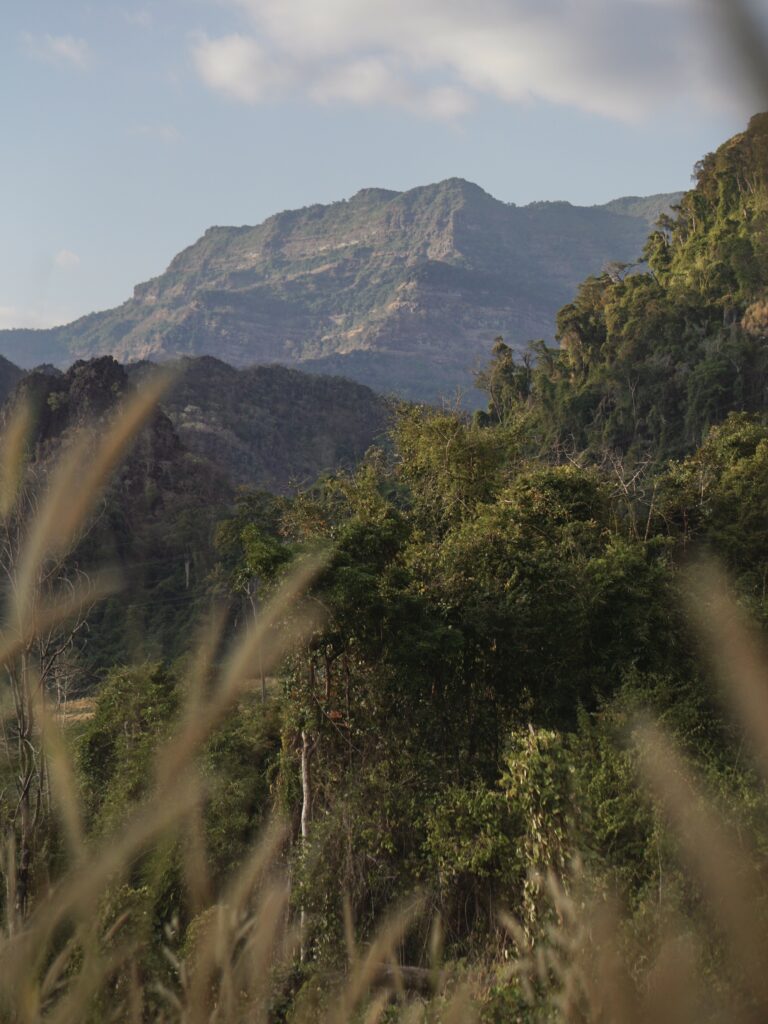
Hinboun Geopark, 863 km², located in Khammouane Province in central Laos, showcases spectacular karst landscapes shaped over millennia by water erosion. Deep valleys, canyons, rugged plateaus and vast cave systems form a dramatic natural fortress that preserves rich biodiversity. The Geopark takes its name from Nam Hinboun, whose name can be translated as “Limestone River”, directly referring to the dominant calcareous geology that structures the entire territory. This territory has been inhabited since prehistoric times, creating a strong historical, cultural and spiritual relationship between karst landscapes and local communities.
The karst of Hinboun Geopark is characterized by cone karst (fengcong), limestone peaks rising hundreds of meters above fertile plains, extended underground by impressive cave networks crossed by seasonal rivers. These caves have long served as shelters, sacred places and vital water reserves.
The Hinboun River, the backbone of the area, also supports agriculture and settlement, shaping a living landscape of rice fields, gardens and villages.
Today, the Geopark promotes community-based governance, scientific research and sustainable nature tourism, aiming to protect heritage while fostering inclusive local development, paving the way for the recognition of the first UNESCO Global Geopark in Laos.
Towards the first UNESCO Global Geopark in Laos
Hinboun Geopark, 863 km², located in Khammouane Province in central Laos, showcases spectacular karst landscapes shaped over millennia by water erosion. Deep valleys, canyons, rugged plateaus and vast cave systems form a dramatic natural fortress that preserves rich biodiversity. The Geopark takes its name from Nam Hinboun, whose name can be translated as “Limestone River”, directly referring to the dominant calcareous geology that structures the entire territory. This territory has been inhabited since prehistoric times, creating a strong historical, cultural and spiritual relationship between karst landscapes and local communities.
The karst of Hinboun Geopark is characterized by cone karst (fengcong), limestone peaks rising hundreds of meters above fertile plains, extended underground by impressive cave networks crossed by seasonal rivers. These caves have long served as shelters, sacred places and vital water reserves.
The Hinboun River, the backbone of the area, also supports agriculture and settlement, shaping a living landscape of rice fields, gardens and villages.
Today, the Geopark promotes community-based governance, scientific research and sustainable nature tourism, aiming to protect heritage while fostering inclusive local development, paving the way for the recognition of the first UNESCO Global Geopark in Laos.
Hinboun Geopark Origins
Section under construction.
A Geopark is a defined geographical area that contains sites and landscapes of geological significance and is managed through a holistic approach combining heritage protection, to promote education and scientific research, and to develop sustainable tourism that benefits local communities.
More than a collection of geological sites, a Geopark is a living territory. It uses geological heritage as a foundation to explore the links between Earth history, nature, culture and human societies, and to address major challenges such as climate change, natural hazards, water management and sustainable use of resources.
Geoparks are built through a bottom-up approach, actively involving local communities, public authorities, scientists, educators and economic actors. They aim to strengthen local identity and pride while encouraging sustainable tourism, knowledge sharing, innovation and job creation.
A geopark first begins with national recognition, meaning that its geological and cultural heritage is identified, protected, and promoted by the country’s authorities. Only after this step can the geopark be proposed for international recognition by UNESCO, which then highlights its global significance and provides additional visibility and support.
Only some geoparks around the world are granted the UNESCO Global Geopark status, which serves as an international mark of excellence.
A UNESCO Global Geopark is first and foremost a Geopark: it must already be well established, actively managed and strongly rooted in its territory.
The UNESCO label is granted only after a rigorous evaluation process, which assesses:
- the international significance of the geological heritage,
- the quality of governance and long-term management,
- the involvement of local communities,
- educational and awareness-raising actions,
- the integration of geological, natural and cultural heritage,
- development and implementation of scientific research programs,
- and the commitment to sustainable development and international cooperation.
The designation is awarded for four years and is regularly re-evaluated to ensure continuous improvement.
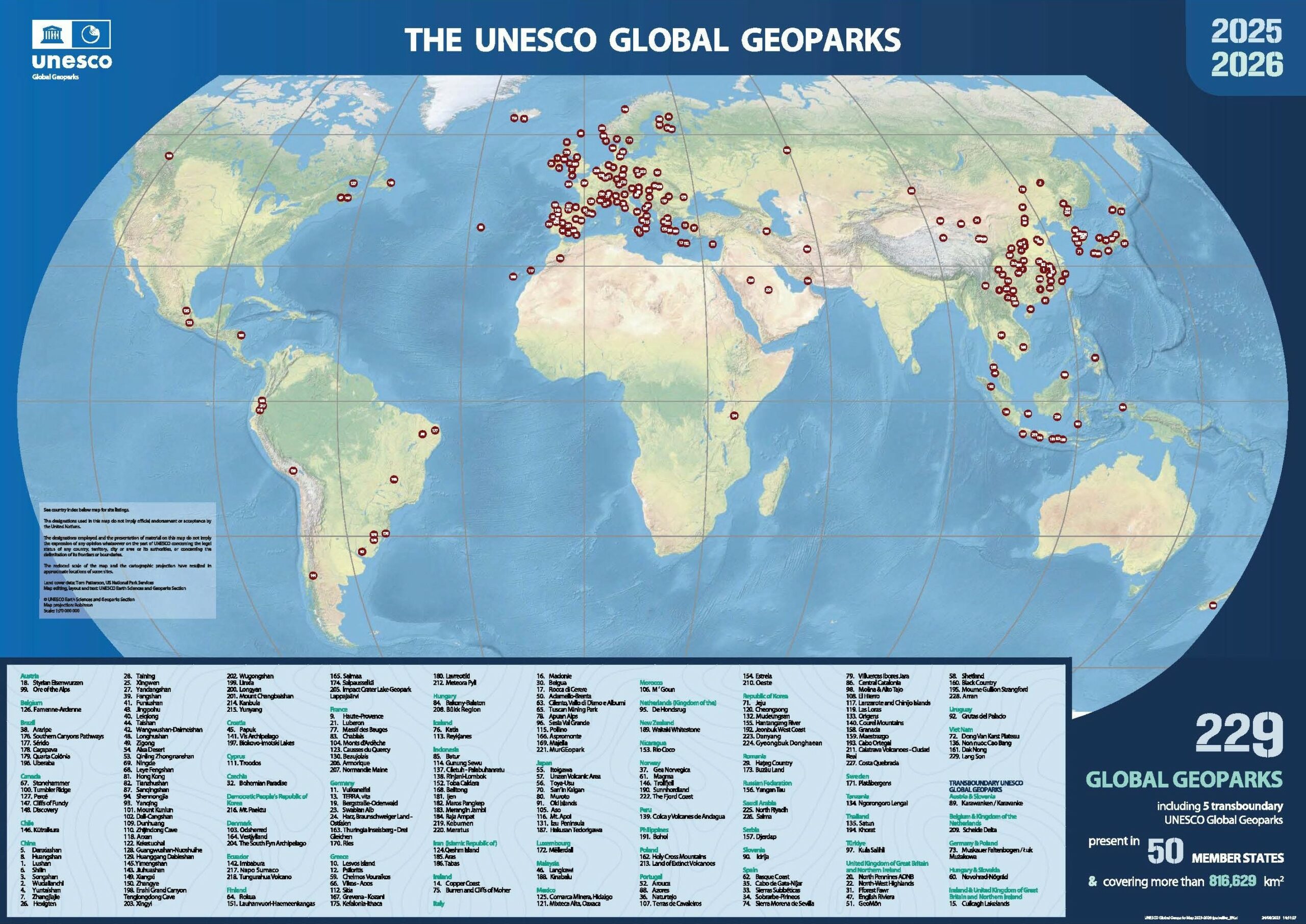
As of 2026, there are 229 UNESCO Global Geoparks in 50 countries, forming a global network that promotes shared values, cooperation and exchange of experience.
Hinboun Geopark was officially created in November 2025 as a national Geopark, in line with the fundamental principles that define Geoparks worldwide: protection of geological heritage, promotion of education and scientific research, community engagement and sustainable territorial development.
At this stage, Hinboun Geopark is not yet a UNESCO Global Geopark. The UNESCO evaluation is planned for the coming years, once the Geopark has further consolidated its actions, governance and long-term strategy.
Becoming a UNESCO Global Geopark would represent an additional level of international recognition, building upon the existing Geopark rather than redefining it. Whatever its future label, Hinboun Geopark is already fully committed to using its geological heritage as a driver for sustainable development and local well-being.
UNESCO Global Geoparks
In 2026, there are 229 UNESCO Global Geoparks spread across 50 countries worldwide, highlighting the growing international recognition of geoheritage as a driver for sustainable development.
These sites are connected through the Global Geoparks Network (GGN), an international platform that brings together geoparks from around the world to exchange knowledge, share experiences, and promote best practices. This cooperation plays a key role in strengthening geopark management, encouraging mutual learning, and ensuring that geoparks actively contribute to sustainable development and the well-being of local communities.
The complete and up-to-date list of UNESCO Global Geoparks is available on the UNESCO website.
At a regional level, cooperation is further supported by networks such as the Asia-Pacific Geoparks Network (APGN), which fosters collaboration and capacity-building among geoparks in the Asia-Pacific region.
Partner UGGPs
Monts d’Ardèche UNESCO Global Geopark, France
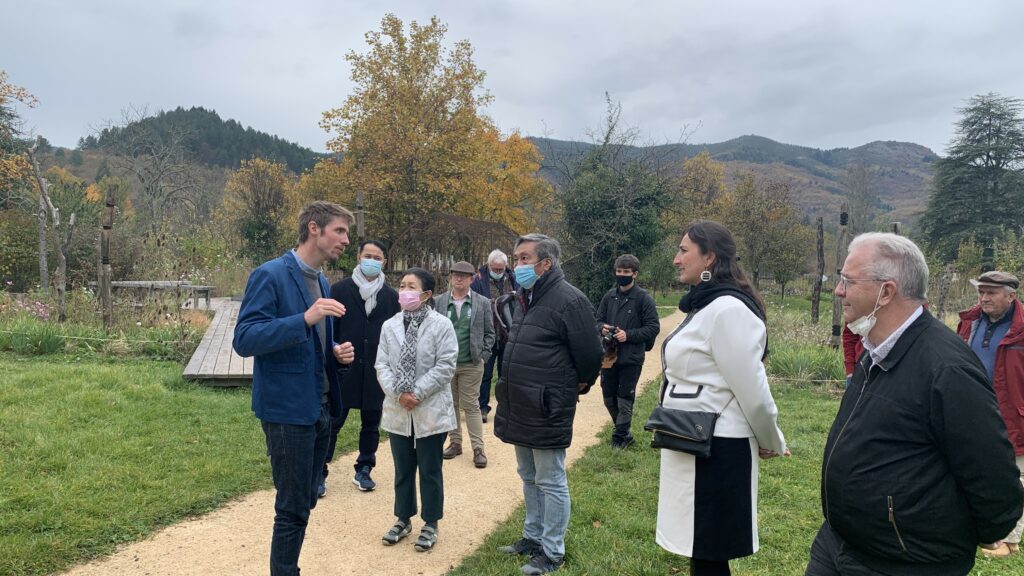
Long-term partner of the Hinboun Geopark since its inception, the Monts d’Ardèche UNESCO Global Geopark has been supporting the establishment of the first geopark in Laos through experience sharing, online trainings, assessment of the potential and coherence of the territory.
Located in southeastern France, it has been recognized by UNESCO’s Global Geoparks Network since 2014. Covering more than 2,200 km², the Monts d’Ardèche Geopark showcases 550 million years of Earth history, with geological formations representing all major eras. Its landscapes range from mountainous massifs and volcanic plateaus to deep river valleys and Mediterranean foothills within the Massif Central. The territory includes numerous geosites of high scientific, educational and aesthetic value, such as volcanic landforms, dinosaur footprints and spectacular rock formations. Iconic landmarks include the phonolitic “sucs” of Mont Gerbier de Jonc and well-interpreted volcanic and sedimentary sites.
Through its integrated approach combining geoheritage protection, education and sustainable tourism, the Monts d’Ardèche Geopark actively supports local development and community engagement. Its long-standing experience and know-how make it a key reference and strategic partner for the sustainable development of the Hinboun Geopark.

Dong Van Karst Plateau UNESCO Global Geopark, Vietnam
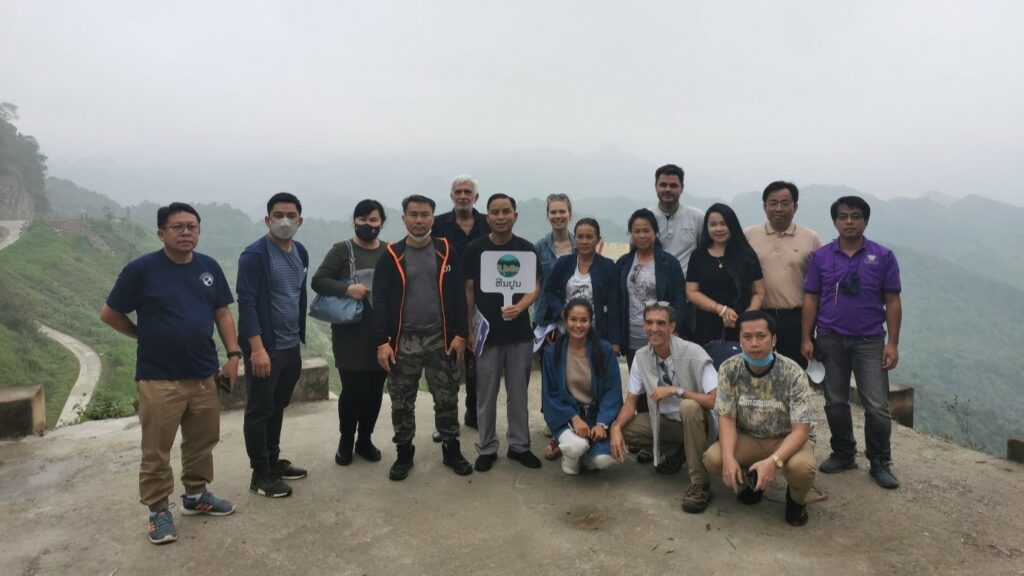
Further to a study tour in May 2022, Dong Van Karst Plateau UNESCO Global Geopark became a key partner supporting the development of the Hinboun Geopark through the sharing of experience in landscape valorisation, heritage interpretation, and sustainable geotourism.
Located in Hà Giang Province in the far north of Vietnam, along the Chinese border, the geopark covers 2,350 km² across the four districts of Quan Ba, Yen Minh, Dong Van and Meo Vac.
Recognized by UNESCO in 2010, Dong Van was Vietnam’s first UNESCO Global Geopark and one of the pioneers in Southeast Asia.
Its territory is characterized by spectacular limestone karst landscapes shaped over more than 500 million years, including high mountain plateaus, deep canyons and rugged valleys. The geopark records a long geological history through remarkable rock formations and fossil sites, contributing to international scientific knowledge. Dong Van also hosts significant biodiversity, including rare and endemic species, alongside rich cultural diversity with more than 17 ethnic minority groups.

Khorat UNESCO Global Geopark, Thailand
Designated as a UNESCO Global Geopark in 2023, Khorat Geopark in Thailand covers 3,167 km² of the Lam Takhong River Basin in Nakhon Ratchasima Province, known as the “Land of Cuestas and Fossils.” Its outstanding geoheritage, including rich fossil records dating from 16 million to 10,000 years ago, supports scientific research and public awareness of Earth history.
The geopark applies a holistic management approach combining conservation, education, youth engagement, and sustainable local development. Local communities play a central role in geotourism, heritage interpretation, and community-based enterprises, strengthening local identity and livelihoods. Partnerships between local authorities, communities, academia, and the private sector ensure inclusive and sustainable benefits.
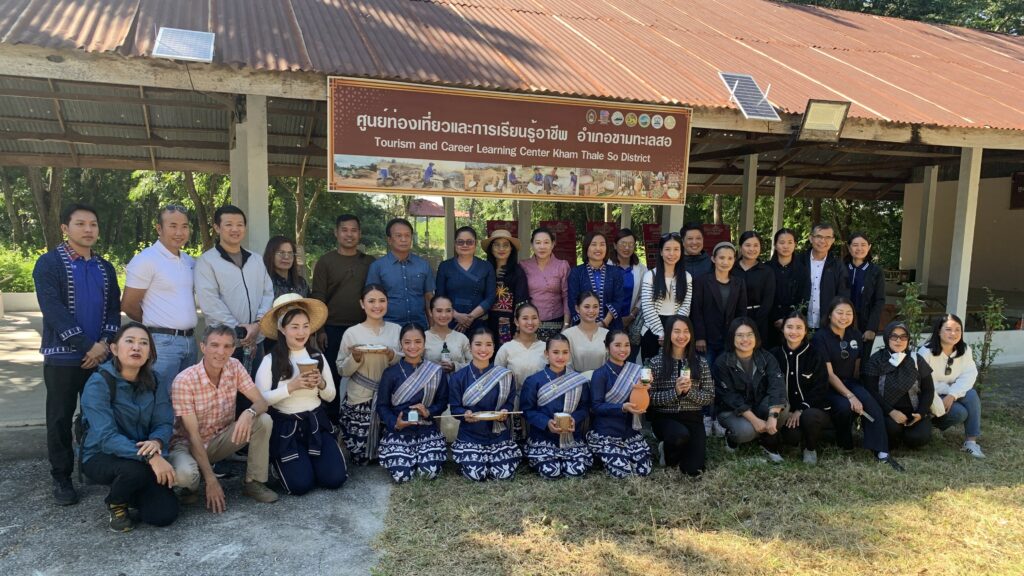
Khorat’s experience in integration and mediation offers us valuable lessons for emerging geoparks in Southeast Asia. Further to an eductour in November 2025, , a future MoU with the Hinboun Geopark in under discussion and would foster knowledge exchange, joint development of mediation tools, and collaboration on community-based sustainable geotourism. In addition, to strengthen the effective management and integration of the Hinboun Geopark, some trainers from Khorat will be welcomed in Laos in 2026
