23 December 2025
Recent scientific investigations at Tham Pha Mue, geosite of Hinboun Geopark, have significantly strengthened knowledge of one of the most important prehistoric rock art sites in Lao PDR.
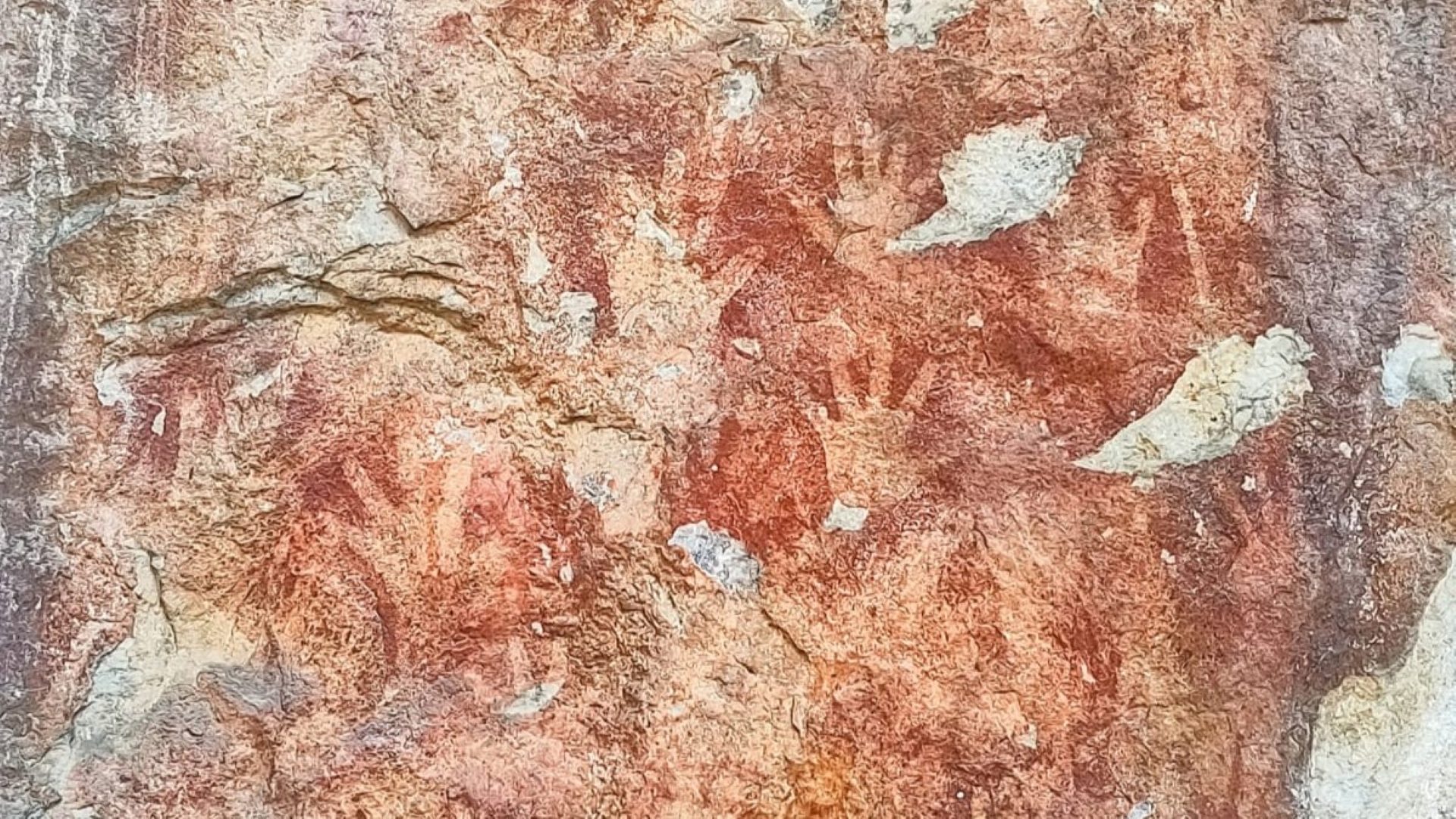
The site contains over 200 rock art motifs, predominantly negative hand stencils, alongside anthropomorphic and zoomorphic figures. These motifs are distributed across multiple panels within a limestone rock shelter overlooking a karst valley, highlighting a strong relationship between human expression and the surrounding landscape.
Tham Pha Mue occupies a strategic and visually prominent position within the karst environment, suggesting its importance not only as a place of artistic expression but also as a symbolic and territorial landmark for past human communities.
Recent documentation work has allowed for a detailed and non-invasive recording of the site, providing a comprehensive inventory of the motifs and their spatial organization. This has improved understanding of the site’s composition, preservation conditions, and potential for future research, including chronological studies.
Comparative analysis places Tham Pha Mue within a broader regional context, revealing strong stylistic affinities with other rock art sites across Mainland Southeast Asia. These similarities contribute to a deeper understanding of long-term cultural connections and shared symbolic practices across the region.
The knowledge generated at Tham Pha Mue provides an essential foundation for heritage conservation, education, and future valorisation initiatives, supporting the integration of scientific research into the sustainable development objectives of the Hinboun Geopark.